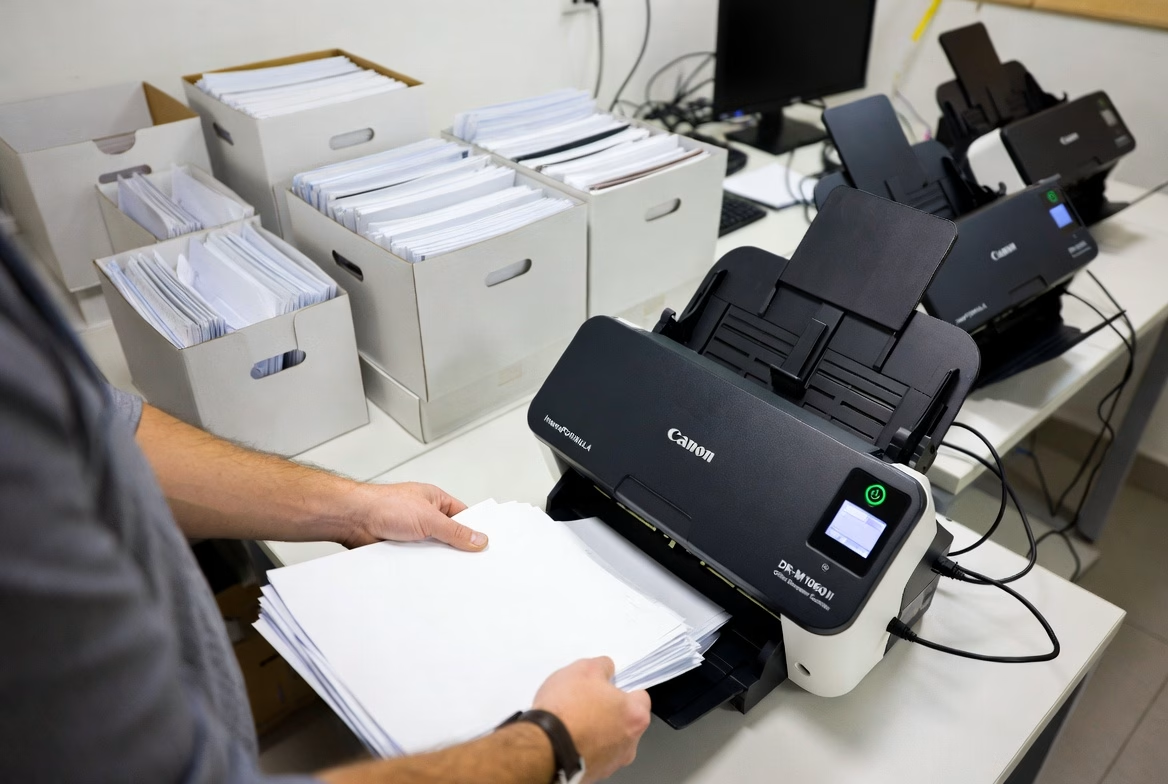
Every construction company has a room, a closet, or a row of flat-file cabinets filled with rolled-up blueprints, shop drawings, and project plans from years or decades of work. These documents represent millions of dollars in project knowledge — and most of them are slowly deteriorating, nearly impossible to search, and one water leak away from being gone entirely.
The construction industry generates more project documentation per dollar spent than almost any other sector. Plans, specifications, as-builts, RFIs, submittals, change orders, and inspection reports pile up on every project. When those records exist only on paper, they become a liability rather than an asset.
Here is why Phoenix-area construction companies are moving to digital blueprint archives — and what the process actually looks like.
The Real Cost of Paper Blueprints
Construction professionals spend an average of 5.5 hours per week searching for project documents. For a project manager billing at $75 to $100 per hour, that is over $20,000 per year in lost productivity — per person. Multiply that across a team and the numbers get serious fast.
But wasted time is only part of the problem. Paper blueprints create several risks that digital archives eliminate.
Version confusion. On any active project, multiple revisions of the same drawing may exist. When those revisions live in flat files or rolled in tubes, it is disturbingly easy to reference an outdated version. In construction, building from the wrong revision means rework, delays, and potential liability.
Physical degradation. Blueprints fade. Large-format drawings crack at fold lines. Mylar yellows. Ink bleeds when exposed to humidity or water. Arizona’s heat accelerates some of these processes, and monsoon season introduces moisture risks that can damage an entire archive overnight.
Limited access. A paper blueprint can only be in one place at a time. When the field crew needs the same drawing that the project manager has spread across their desk, someone waits. When a subcontractor needs reference drawings, someone makes copies. When an owner requests as-built documentation, someone digs through archives.
No disaster recovery. If a fire, flood, or break-in destroys your plan room, those records are gone permanently. For projects still under warranty or facing potential claims, losing the documentation means losing your ability to defend your work.
What Digital Archives Change
Scanning blueprints and project documents to searchable digital files transforms how a construction company manages its project history.
Instant retrieval by project, drawing number, or keyword. Instead of pulling tubes from flat files and unrolling drawings on a table, any team member can search by project name, drawing number, date, or even text within the document. A search that used to take 30 minutes takes 30 seconds.
Access from anywhere. Digital files can be stored in cloud systems or integrated with project management platforms like Procore, PlanGrid, or BIM 360. The field superintendent, the office PM, and the client can all view the same drawing simultaneously from different locations.
Complete revision history. Every version of every drawing can be preserved and organized chronologically. No more guessing which revision is current — the digital archive maintains the full record.
Permanent preservation. A blueprint scanned at high resolution today will be perfectly legible in fifty years. The digital copy does not fade, crack, or get damaged by handling. For firms that need to retain project records for warranty periods, statute of limitations windows, or long-term client relationships, this is critical.
Space recovery. Flat-file cabinets and plan rooms take up valuable office space. A typical five-drawer flat file holds roughly 500 sheets and occupies 20 square feet including access clearance. At Phoenix commercial lease rates, that is $500 to $700 per year per cabinet — space that could house another workstation or meeting area.
What the Scanning Process Looks Like
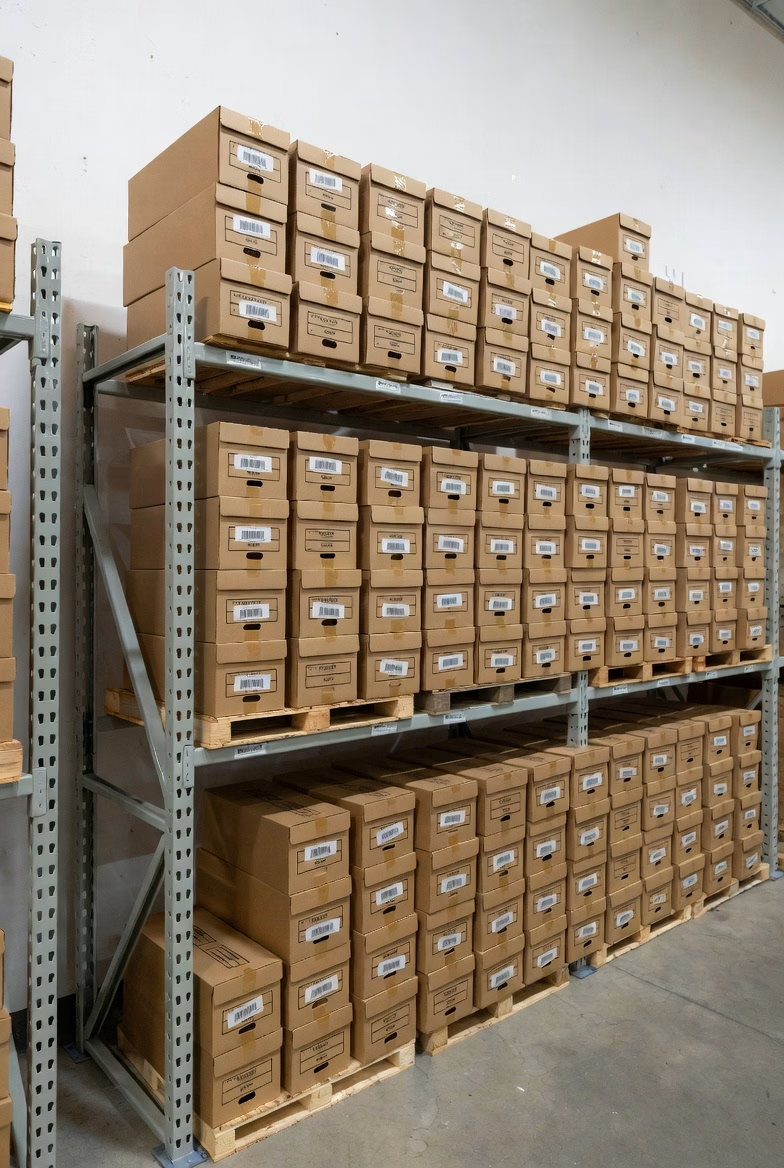
Large-format scanning is more specialized than standard document scanning, but the workflow is straightforward.
Assessment. The scanning provider reviews your archive to determine the volume, sizes (24″ x 36″, 30″ x 42″, 36″ x 48″, etc.), condition of originals, and how you want the digital files organized.
Preparation. Drawings are unrolled, flattened, and inspected. Torn edges are reinforced. Documents are sorted by project, date, or whatever organizational scheme you prefer.
Scanning. Wide-format scanners capture each drawing at high resolution — typically 200 to 400 DPI depending on the detail level required. Color, grayscale, or black-and-white scanning is selected based on the original.
Processing. Scanned images are cleaned up (deskewed, cropped, contrast-adjusted), converted to searchable PDF or TIFF format, and indexed according to your naming conventions.
Delivery. Files are delivered on a hard drive, uploaded to your cloud storage, or imported directly into your project management system.
Original handling. Depending on your retention needs, originals can be returned, stored, or securely destroyed.
Overland Printing’s Blueprint Heritage
Overland Printing started as AZ Overland Blueprint in 1987, serving Phoenix’s construction and architecture community with blueprinting, plan reproduction, and large-format printing. We have handled hundreds of thousands of construction drawings over nearly four decades.
That heritage means we understand construction documents — not just how to scan them, but how they are used. We know the difference between a shop drawing and an as-built. We know that revision clouds matter. We know that field markups need to be captured, not cleaned away.
When we scan your blueprints, we bring that construction knowledge to every project.
Ready to digitize your blueprint archive? Get a free scanning estimate or call us at 602-224-9971.