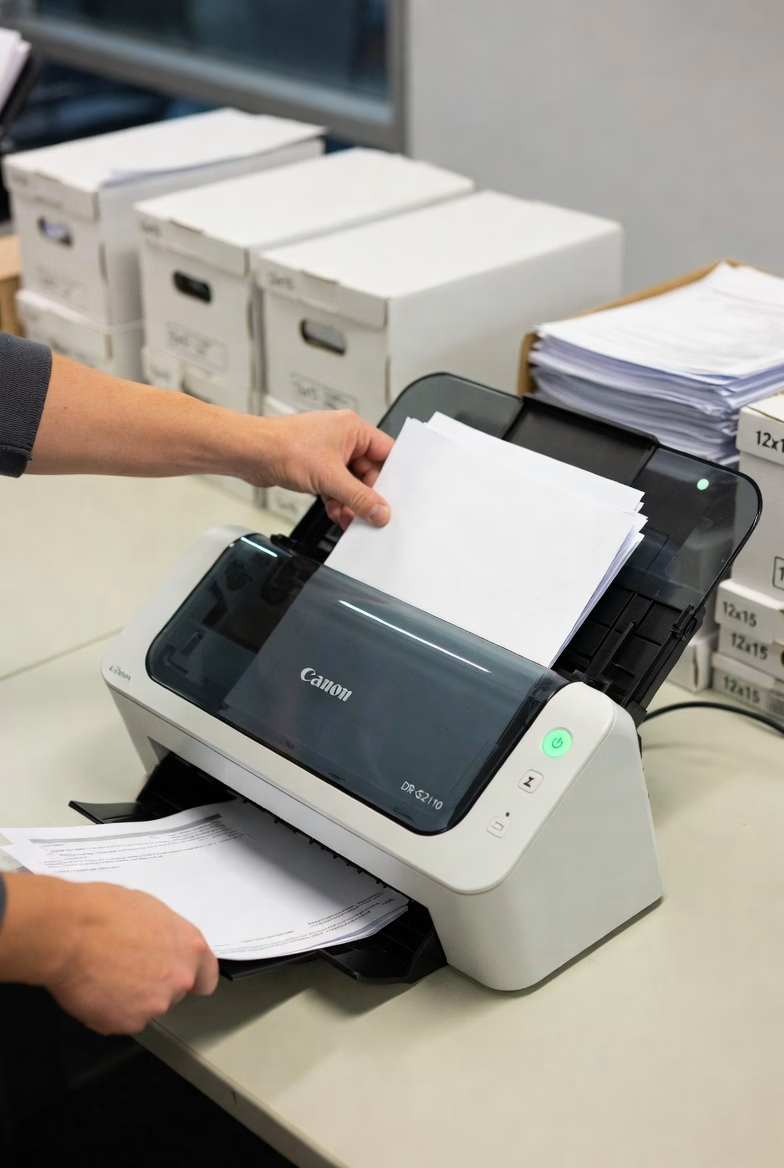
Every healthcare practice in Arizona faces the same question at some point: how long do we actually need to keep these records? The answer matters more than most providers realize. Failing to retain medical records for the required period can expose a practice to malpractice liability, regulatory penalties, and HIPAA violations — even years after a patient’s last visit.
Here is what Arizona law requires and how Phoenix-area practices are staying compliant without drowning in paper.
What Arizona Law Says: ARS 12-2297
Arizona Revised Statutes § 12-2297 sets the baseline retention requirements for all healthcare providers in the state. The rules vary depending on the patient’s age.
Adult patients: Retain the original or copies of medical records for at least six years after the last date the patient received care from that provider.
Minor patients: Retain records for whichever is later — six years after the last date of service, or three years after the patient turns 18. In practice, this means pediatric records can require retention for up to 21 years.
Nursing care institutions: Retain patient records for six years after the date of discharge. The same minor-patient rules apply.
Source data (lab results, imaging, diagnostic data): May be maintained separately from the main medical record but must be kept for six years from the date of collection.
These are minimums. Federal regulations, specialty board requirements, or malpractice insurance policies may require longer retention in certain situations.
What Happens When a Practice Closes or Changes Hands
ARS 12-2297 specifically addresses practice transitions. When a healthcare provider retires or sells their practice, they must take “reasonable measures” to ensure records continue to be retained for the full required period.
This is where many providers get caught off guard. A physician retiring in 2026 who last saw a pediatric patient in 2020 may still need those records preserved until 2038 or later. Simply locking file cabinets in a storage unit does not satisfy the “reasonable measures” standard if those records become inaccessible or deteriorate.
Digitizing records before a practice transition is one of the most reliable ways to ensure continued compliance. Digital files can be transferred to the acquiring practice, stored securely in the cloud, or maintained by a records custodian — all without the risk of physical degradation.
HIPAA Compliance and Record Retention: Clearing Up a Common Misconception
Many healthcare providers assume HIPAA dictates how long medical records must be kept. It does not. HIPAA’s six-year retention requirement applies to compliance documentation — policies, procedures, risk assessments, training records, and audit logs — not to patient medical records themselves.
Patient record retention is governed by state law, which in Arizona means ARS 12-2297. However, HIPAA does impose strict requirements on how records are stored, accessed, and eventually destroyed, regardless of the format. Any practice handling protected health information (PHI) must ensure that physical and digital records are secured against unauthorized access throughout the entire retention period.
This means that a box of patient charts sitting in an unlocked storage closet is a HIPAA violation today, not just a risk for the future.
Why Paper Records Create Compliance Risk
Paper-based records present several challenges that grow more serious over time.
Physical degradation. Paper fades, gets damaged by water or humidity, and becomes brittle. Arizona’s climate helps with humidity, but heat and sunlight can be just as destructive over a six-to-twenty-one-year retention window.
Access control. HIPAA requires that PHI be accessible only to authorized personnel. Controlling access to physical file rooms — especially across multiple offices, during renovations, or after staff turnover — is difficult to audit and easy to fail.
Disaster recovery. A single fire, flood, or break-in can destroy years of irreplaceable records. Without backups, the practice loses both its compliance documentation and its legal protection.
Storage costs. The average medical practice generates thousands of pages per year. Over a six-year minimum retention period, physical storage costs add up quickly — and the space those files occupy could be used for patient care.
How Document Scanning Solves the Retention Problem
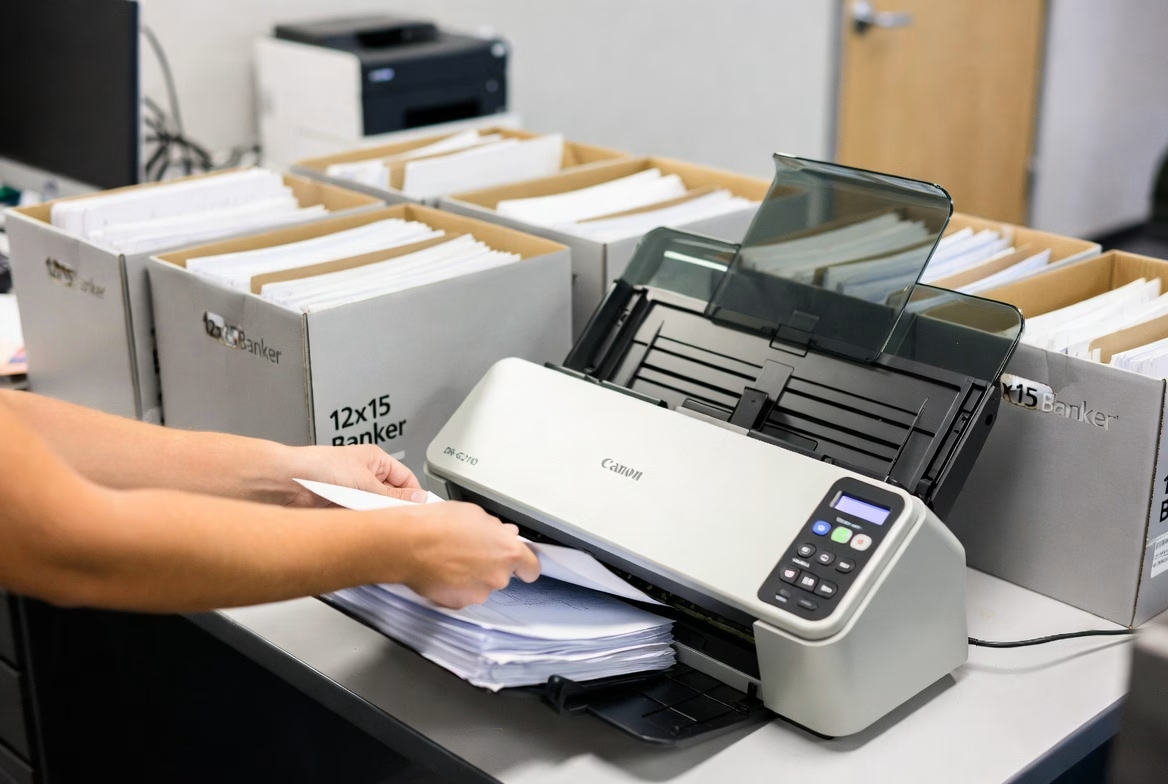
Converting paper medical records to searchable digital files addresses every challenge listed above while keeping practices fully compliant with both ARS 12-2297 and HIPAA.
Durability. Digital files do not degrade. A record scanned today will be identical in quality twenty years from now, with proper backup procedures in place.
Access control. Digital records can be protected with role-based access, encryption, and audit trails — exactly what HIPAA requires. Every access attempt is logged, making compliance audits straightforward.
Disaster recovery. Cloud-stored or redundantly backed-up digital records survive physical disasters. Practices can restore their entire archive from a secure backup in hours rather than discovering that decades of records are gone.
Space and cost savings. Scanning eliminates the need for expanding file rooms, renting offsite storage units, or dedicating staff time to filing and retrieval. Most practices recoup the cost of scanning within the first year through reduced storage expenses alone.
Faster retrieval. When records are scanned to searchable PDF format, staff can locate any document in seconds rather than pulling physical charts — improving both patient care and administrative efficiency.
What to Look for in a Scanning Partner
Not every scanning service can handle medical records. Healthcare document scanning requires specific safeguards.
HIPAA compliance. Your scanning partner should sign a Business Associate Agreement (BAA) and demonstrate documented security protocols for handling PHI. This includes secure chain of custody from pickup through scanning, indexing, and delivery.
Experience with medical documents. Medical records come in all sizes and formats — from standard letter-size charts to oversized imaging films and multi-part forms. A scanning provider with healthcare experience will handle these efficiently without damaging originals.
Quality assurance. Every scanned page should be checked for legibility, correct orientation, and proper indexing. Automated quality checks catch blank pages, skewed images, and illegible scans before delivery.
Secure destruction options. After records are digitized and verified, the original paper may need to be securely shredded. A full-service scanning provider can handle this step as well, with certificates of destruction for your compliance files.
Keep Your Practice Compliant — Without the Paper
Arizona’s medical records retention requirements are not going away, and neither is the paper piling up in your file room. Scanning those records is one of the most practical steps a Phoenix-area healthcare practice can take to reduce risk, free up space, and simplify compliance for years to come.
Overland Printing has provided document management services to Phoenix businesses for over 25 years. Our HIPAA-compliant scanning process includes secure pickup, high-quality digitization, searchable PDF delivery, and optional shredding — everything your practice needs to go paperless with confidence.
Ready to get your records under control? Get a free scanning quote or call us at 602-224-9971.
This article is provided for general informational purposes and does not constitute legal advice. Healthcare providers should consult with a qualified attorney regarding their specific retention obligations.